When people watch a Japanese tea ceremony for the first time, many feel the same quiet confusion.
Why is it so slow?
Why is there so much silence?
And why does such a simple act feel strangely meaningful?
This article explores why the tea ceremony feels so uniquely Japanese, not by focusing on rules or procedures, but by looking at the cultural values behind it.
Through the history of Sadō, the aesthetics of wabi-sabi, and everyday habits that Japanese people may not consciously notice, you will see how tea ceremony reflects a broader Japanese way of thinking—one that values harmony, restraint, and shared atmosphere over explanation.
By the end of this article, tea ceremony may feel less mysterious, and more like a quiet expression of how Japan approaches beauty and human connection.
Why the Tea Ceremony Feels So Different
For many visitors, the Japanese tea ceremony looks quiet, slow, and slightly mysterious.
People sit in silence.
Every movement is deliberate.
Nothing appears rushed or explained.
There is also seiza—sitting directly on the floor.
For visitors from chair-based cultures, this alone can feel challenging.
In fact, many modern Japanese people are no longer used to it either.
So this raises natural questions:
- Why is the tea ceremony so quiet?
- Why are movements so slow and precise?
- Why does such a simple act feel meaningful to watch?
In Japan, tea ceremony—called Sadō or Chadō—is not about drinking tea itself.
It is a cultural practice that expresses how Japanese people view beauty, time, and human relationships.
Understanding tea ceremony helps explain why Japan often feels calm, restrained, and deeply intentional.
How Tea Ceremony Began in Japan
Tea was introduced to Japan from China during the Heian period.
In the Kamakura period, the monk Eisai spread tea together with Zen Buddhism, emphasizing its ability to calm the mind and improve focus.
Later, during the Muromachi period, Murata Jukō developed wabi-cha, a quieter and more spiritual approach that moved away from luxury and display.
In the 16th century, Sen no Rikyū refined this style and established the foundation of modern tea ceremony.
He emphasized:
Simplicity
Humility
Awareness of the present moment
During the Edo period, tea ceremony spread beyond monks and warriors and became part of cultural education for ordinary people, including women.
Over time, it became less about religion and more about how to share space respectfully.
Tea Is Not the Main Focus
Despite its name, tea ceremony is not really about tea.
It is about how people share time and space together.
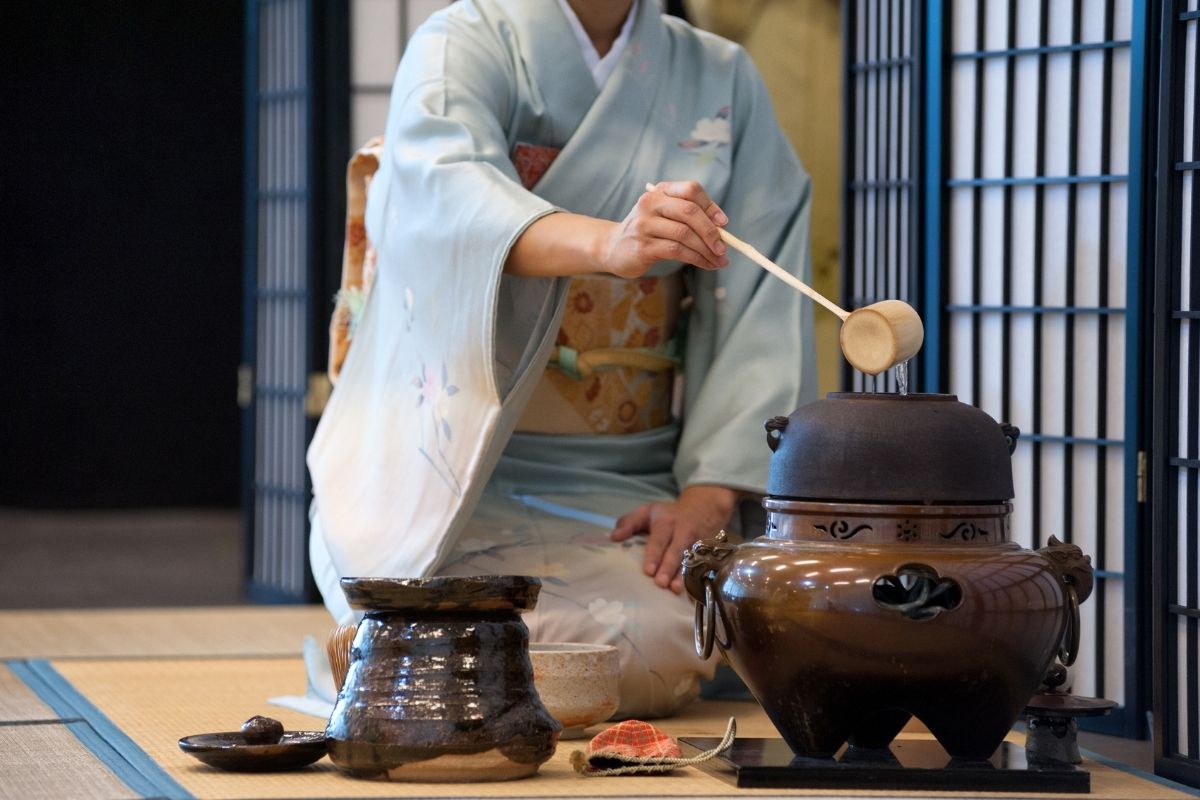
Pouring hot water.
Wiping the bowl.
Placing each tool carefully.
Nothing is done to impress.
Nothing is rushed.
The purpose is to create a moment where everyone present can feel calm, equal, and attentive.
This reflects the Japanese concept of wa—harmony within a shared space.
Beauty in Simplicity and Imperfection
Tea rooms are intentionally small and minimally decorated.
The tools used are often old, worn, or slightly imperfect.
This reflects the Japanese aesthetic of wabi-sabi—
finding beauty in impermanence, simplicity, and age.
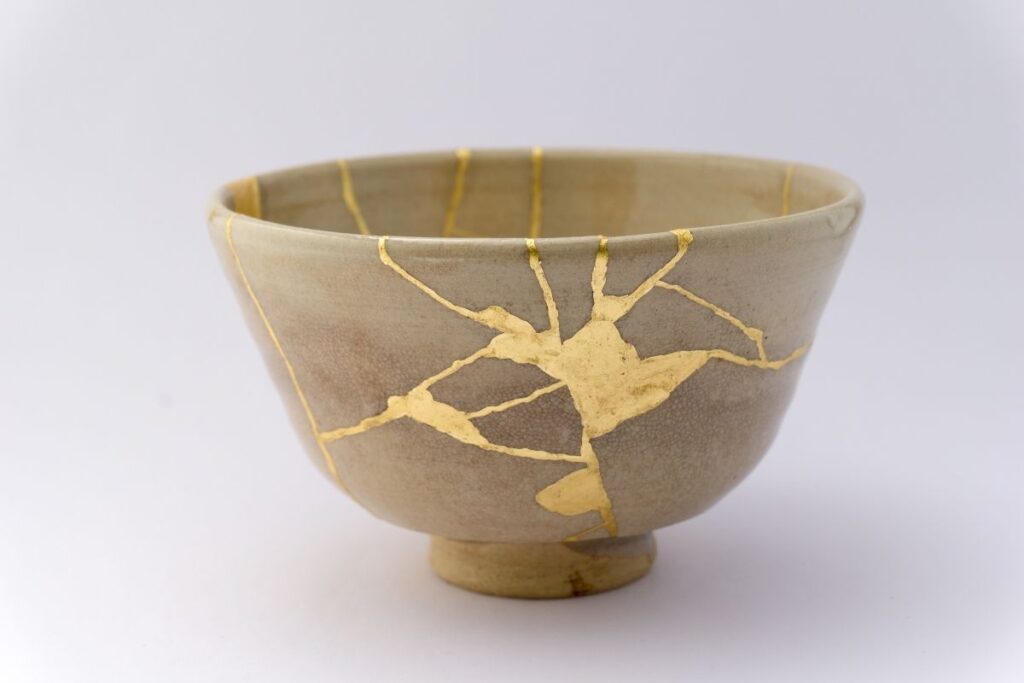
A cracked tea bowl is not hidden.
Its history is respected.
This way of thinking also appears in kintsugi, where broken pottery is repaired with lacquer and gold powder instead of being discarded.
Rather than erasing damage, it becomes part of the object’s story.
This mindset is deeply rooted in Japanese history.
Even ancient Jōmon pottery has been found repaired with lacquer.
Perhaps this is why, in Japan, small shrines often remain standing between modern buildings.
Preserving the old alongside the new feels natural rather than contradictory.
Silence as Communication
【🔗 Why Japan Is Like This: Indirect Communication and “Reading the Air”】
【🔗 Why Japan Is Like This: Silent Trains and Quiet Public Spaces】
Many visitors are surprised by how little talking happens during tea ceremony.
There are no long explanations.
Very few spoken instructions.
But this silence is not awkward.
It allows participants to notice:
- The sound of boiling water
- The warmth of the tea bowl
- The presence of others
In Japanese culture, meaning is often felt rather than spoken.
This connects closely to indirect communication and “reading the air,” where people adjust their behavior based on atmosphere instead of direct words.
The same sensitivity appears in quiet trains and public spaces, where people naturally lower their voices without being told.
Tea ceremony simply makes this everyday cultural habit visible.
Tea Ceremony and Everyday Japanese Life
Although tea ceremony looks formal, its values come from everyday life.
- Respect for others
- Care for small details
- Awareness of shared space
These ideas appear in greetings, meals, and daily behavior.
Tea ceremony highlights them in a concentrated form.
The phrase ichi-go ichi-e—“this moment will never come again”—reminds participants to treat each encounter as unique.
By removing what is unnecessary, attention becomes deeper.
This philosophy is also shared with Zen gardens, where stones and sand suggest landscapes without direct representation.
Less explanation allows for deeper meaning.
A Personal Memory of Tea Ceremony
When I was twelve years old, I was invited to a tea gathering at my teacher’s home.
I was shown the steps one by one—but I could not remember them at all.
Instead, I quietly watched the adults around me and tried to imitate their movements.
Only later did I understand that every gesture carries meaning.
Nothing is accidental.
It was cherry blossom season, and I wore a kimono—uncomfortable, yet feeling strangely grown-up.
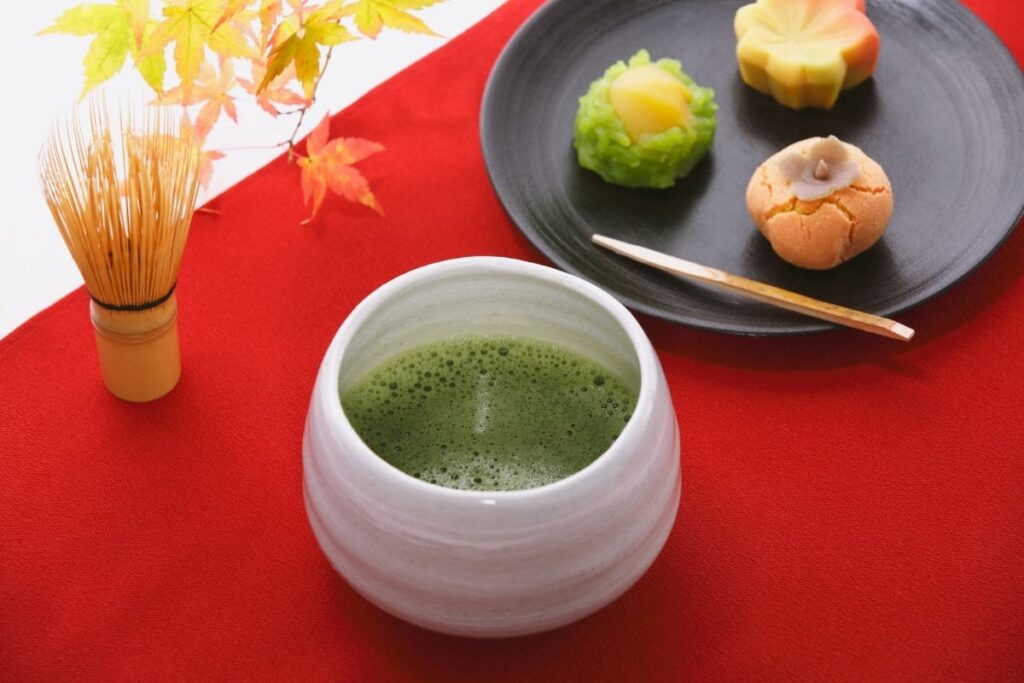
I tasted matcha for the first time: bitter, unfamiliar, paired with a small piece of wagashi eaten slowly.
That balance of bitterness and sweetness, combined with the stillness of the room, stayed with me.
Afterward, I walked alone beneath blooming cherry trees, quietly replaying the experience in my mind.
Looking back now, I smile at that twelve-year-old girl who somehow managed to sit in seiza until the very end.
Why Tea Ceremony Can Feel Difficult to Understand
In cultures that value efficiency and clear explanation, tea ceremony can feel slow or confusing.
It does not aim to explain.
It does not hurry.
Instead, it invites people to feel before understanding.
This difference is not about right or wrong, but about cultural perspective.
A Gentle Way to Experience Japanese Aesthetics
You do not need to study tea ceremony to appreciate it.
You do not need to understand every rule.
Simply watching is enough.
In that quiet moment, you may sense how Japanese people relate to time, beauty, and others—
not through words, but through shared presence.
Tea ceremony is not meant to be fully understood through explanation.
Its purpose is not efficiency, education, or display.
Instead, it quietly shows how Japanese culture values presence over performance, feeling over words, and harmony over individuality.
This same mindset appears in many parts of everyday life in Japan—
in quiet trains, indirect communication, seasonal awareness, and the care given to shared spaces.
Seen this way, tea ceremony is not an isolated tradition from the past.
It is a condensed reflection of how Japan continues to move through the world today:
slowly, attentively, and with respect for the moment being shared.

[English] A local insider born in Nagasaki, educated in the U.S., and now based in the Kanto region. After a career in finance and publishing in Tokyo, I now explore the “Why” behind Japanese culture and hidden regional gems. My mission is to help you discover the authentic heart of Japan beyond the tourist crowds.
[한국어] 나카사키 출생, 미국 유학을 거쳐 도쿄 금융권 및 편집자로 활동한 현지인 에디터입니다. 현재 관동 지역에 거주하며 후쿠오카를 비롯한 일본 전역의 ‘진짜’ 매력과 독특한 문화 이야기를 전합니다. 여러분의 여행이 더욱 깊어지는 길잡이가 되겠습니다.