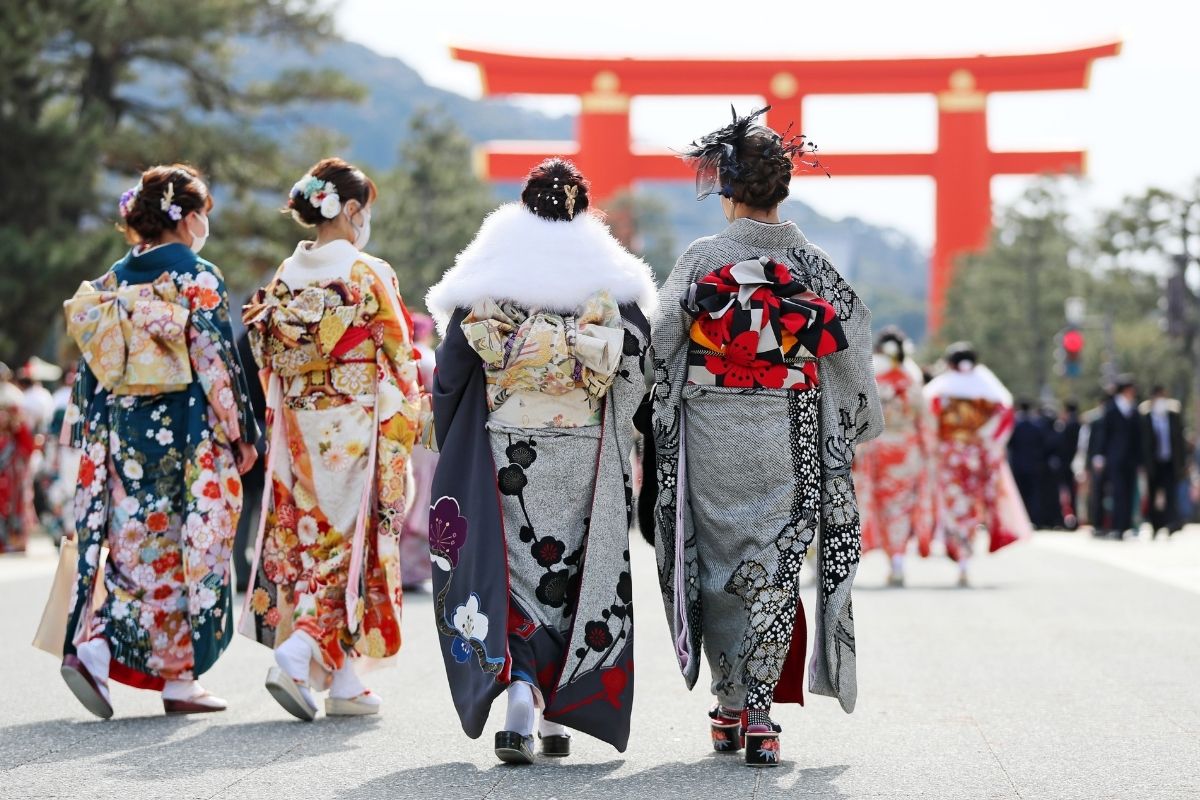
For many people outside Japan, kimono is admired mainly for its beauty—elegant colors, seasonal patterns, and graceful silhouettes.
But in Japan, wearing kimono is not only about appearance.
It quietly changes how a person moves, behaves, and relates to others.
This article explores what wearing kimono reveals about Japanese values—from inner beauty and memory to respect and awareness of space.
By the end, you will understand why kimono still matters in modern Japan, even though it is rarely worn in daily life.
Kimono Shapes How You Move—and How You Think
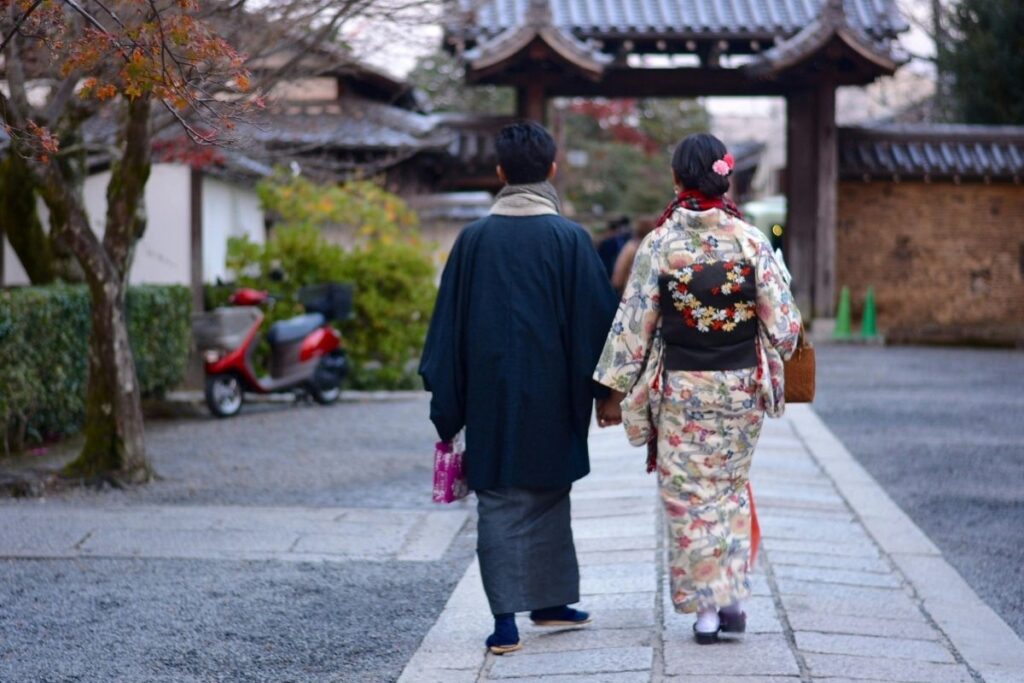
Kimono is not easy to move in.
Because of that, everything slows down naturally.
- You take smaller steps
- You sit more carefully
- You turn and reach with intention
None of this is written as a rule.
It simply happens.
Kimono encourages calmness, restraint, and awareness of the body.
In Japan, beauty is often found not in showing oneself, but in how gently one exists among others.
This same sensibility appears in everyday behavior, such as quiet public transportation and orderly shared spaces.
👉 Related articles:
🔗 Why Do People Line Up So Quietly in Japan?
🔗 Why Japan Is Like This: Silent Trains and Quiet Public Spaces
Kimono Is Not Just Clothing — It Is a Way of Carrying Yourself
The word kimono originally meant simply “something to wear.”
Only after Western clothing arrived in Japan about 150 years ago did kimono come to mean traditional Japanese dress.
Yet even after it disappeared from daily life, the mindset remained.
Wearing kimono naturally straightens the back and softens movements.
It makes you aware of space—your own and that of others.
This quiet sensitivity connects closely to indirect communication and reading the air, where meaning is often shared without words.
👉 Related article: 🔗 Why Japan Is Like This: Indirect Communication and “Reading the Air”
A Personal Memory: Kimono and a Moment That Stayed With Me
I wore furisode at my coming-of-age ceremony at twenty, and again at my engagement ceremony before marriage.
On the morning of my engagement ceremony, heavy snow had fallen overnight.
Walking to the salon for dressing was difficult.
Once the kimono was finished, even a few steps felt challenging.
At the ceremony, an elaborate meal was placed before me.
But the obi was tied so tightly that I could barely eat.
My grandmother, sitting beside me, leaned over and whispered in her Kyushu dialect,
“It’s delicious… I wish you could eat a little more.”
Her voice has stayed with me ever since.
Today, kimono is rarely worn in everyday life.
Yet for milestones—engagements, weddings, seasonal festivals, and children’s celebrations—kimono holds memories together with fabric.
That is why photographs taken in kimono are often treasured for a lifetime.
Why Wearing Kimono Feels Formal Without Being Strict
There are no laws about behavior when wearing kimono.
Still, people instinctively act with more care.
This is similar to bowing instead of shaking hands, where respect is expressed through posture rather than explanation.
👉 Related article: 🔗 Why Japan Is Like This: Bowing Instead of Handshakes
Kimono quietly signals that this moment matters.
Beauty Beyond Fashion: Timelessness and Meaning
Kimono does not follow trends.
It can be worn across generations, even as body shapes change.
Patterns also carry symbolic meaning:
- Cranes: longevity and harmonious marriage
- Pine, bamboo, and plum: resilience and celebration
- Cherry blossoms: new beginnings
- Butterflies: growth and transformation
- Rabbits: prosperity and continuity
These designs communicate without words.
Meaning is woven into the cloth itself.
A Gentle Note for Visitors: One Essential Rule
If you ever wear kimono or yukata, remember this:
Always wrap the right side over the left.
Left-over-right is for the deceased.
This is not about strictness.
It is about respect.
How to Remember the Correct Way
- The “Y” rule: When worn correctly, the collar looks like a lowercase “y” from the front
- Opposite of Western clothes: Western clothing is left-over-right; kimono is the reverse
- Practical origin: Designed for right-handed movement
This single detail carries deep cultural meaning.
From Everyday Wear to Ceremonial Dress
Kimono exists in many forms:
- Uchikake and shiromuku for weddings
- Black mofuku for funerals
- Furisode for unmarried women
- Yukata for summer festivals and hot springs
Yukata remains the most accessible, often becoming a visitor’s first experience with traditional Japanese clothing.
Why Kimono Still Matters in Modern Japan
Kimono is no longer everyday wear.
But it continues to teach something essential.
That beauty is not about standing out.
It is about how gently you move through the world,
how carefully you treat moments,
and how memories are shaped through behavior.
A Final Thought: Kimono as a Cultural Experience
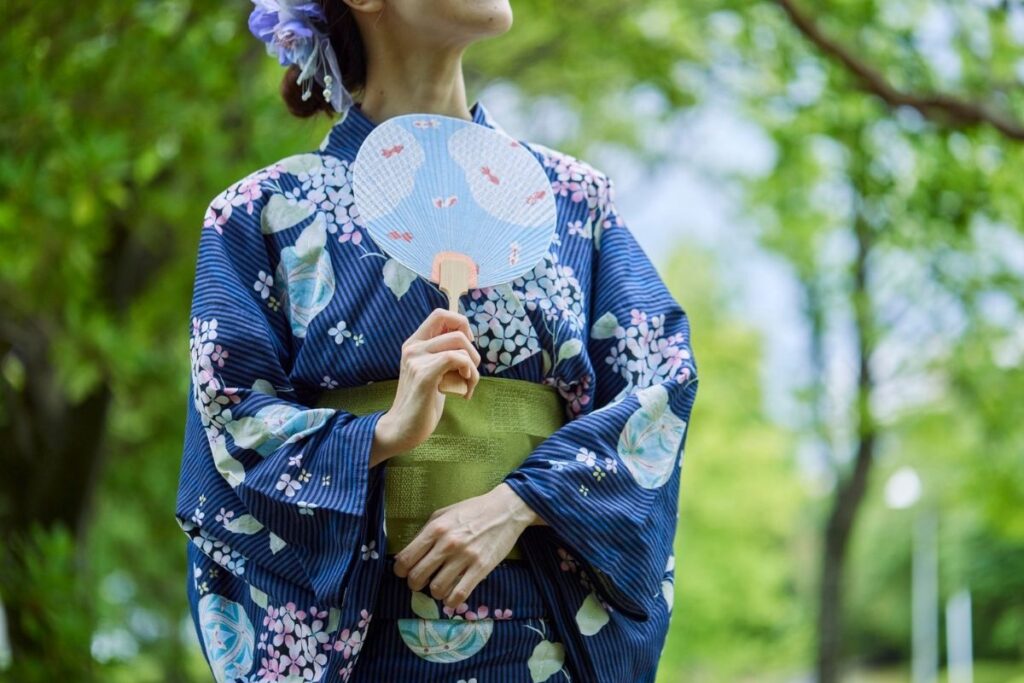
Kimono rental services have become popular in tourist areas across Japan.
They allow visitors to walk historic streets dressed in traditional clothing.
It is not always comfortable.
Movements are restricted.
The obi feels tight.
The sandals are unfamiliar.
Yet through this inconvenience, many people discover something important.
Kimono asks you to slow down.
To walk carefully.
To notice your posture, your surroundings, and the people around you.
If even for a short time, wearing kimono allows visitors to feel this rhythm of Japanese life,
then it becomes more than a photo opportunity.
It becomes a memory—
one that quietly carries Japanese culture long after the kimono is returned.

[English] A local insider born in Nagasaki, educated in the U.S., and now based in the Kanto region. After a career in finance and publishing in Tokyo, I now explore the “Why” behind Japanese culture and hidden regional gems. My mission is to help you discover the authentic heart of Japan beyond the tourist crowds.
[한국어] 나카사키 출생, 미국 유학을 거쳐 도쿄 금융권 및 편집자로 활동한 현지인 에디터입니다. 현재 관동 지역에 거주하며 후쿠오카를 비롯한 일본 전역의 ‘진짜’ 매력과 독특한 문화 이야기를 전합니다. 여러분의 여행이 더욱 깊어지는 길잡이가 되겠습니다.