The Cultural Roots of Kindness, Community, and Everyday Care in Japan
Introduction: What This Article Will Explain
Visitors to Japan—and people who watch videos about daily life here—often notice something that feels unusual.
Strangers help each other without hesitation.
For example:
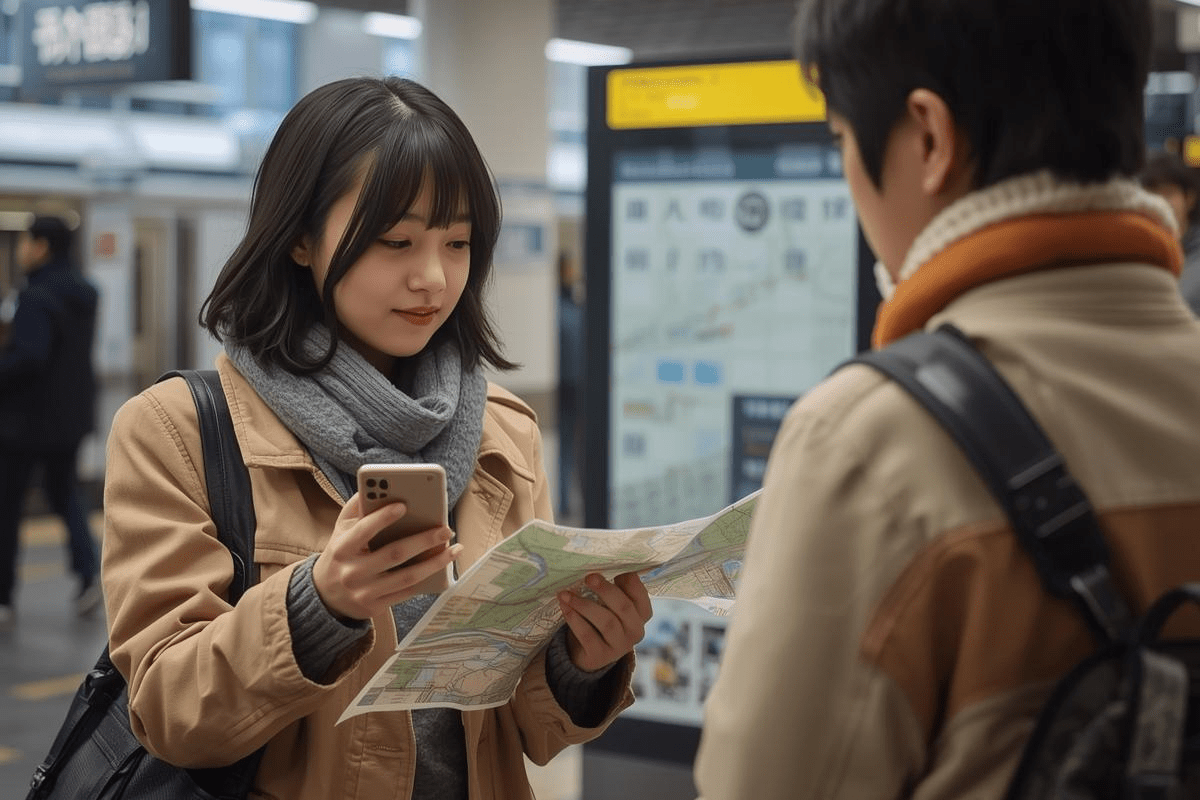
- Someone walks you all the way to your destination, even without a shared language
- A restaurant staff member briefly watches a baby so a parent can eat
- A passerby helps a confused traveler at a busy train station
These actions are not required by law.
They are not rewarded.
And they are rarely recorded.
So why do Japanese people take time out of their own day to help others?
This article explains why everyday kindness feels natural in Japan, based on lived experience, cultural values, and social habits—not stereotypes.
In this article, you will learn:
- Why helping others often feels “emotionally necessary” in Japan
- How harmony and shared responsibility shape behavior
- Why Japanese kindness is usually quiet and unannounced
- What overseas visitors sometimes misunderstand about this behavior
A Personal Experience: Why Ignoring Someone Feels Wrong
I help people instinctively.
If someone drops something, I run after them.
If someone looks lost at a station, I ask if they need help.
Foreign visitors often stop me on the street, and if needed, I look things up for them.
Ignoring them doesn’t feel neutral.
It feels wrong.
If I left a lost item behind, I would imagine how worried that person might be.
If someone wasted precious travel time because no one helped, their day might turn exhausting instead of joyful.
That imagined discomfort stays with me.
And when someone smiles with relief or gratitude, my own day feels lighter.
I want them to like Japan.
I want them to leave with good memories.
Many Japanese people feel the same way—even if we never talk about it.
How This Behavior Looks to People Overseas
Many overseas viewers react strongly when they see these moments.
- “I can’t believe they helped without being asked.”
- “This would never happen where I live.”
I often see comments like these online.
Sometimes I am surprised that this behavior feels so extraordinary.
To many Japanese people, it feels ordinary.
Cultural Background: Why Helping Feels Natural
1. Harmony (Wa) Over Individual Convenience
In Japan, the concept of wa—social harmony—is deeply rooted.
From childhood, people are taught to:
- notice the atmosphere
- avoid causing discomfort to others
- adjust themselves to shared spaces
Helping someone is often the easiest way to restore harmony.
Leaving someone visibly struggling creates tension—not only for them, but for the people around them.
This sensitivity to atmosphere also appears in other everyday behaviors.
→ Internal Link: Why Japanese People Read the Air (Indirect Communication)
2. Helping to Reduce Emotional Unease
Japanese kindness is not always dramatic or idealistic.
Often, it is practical.
Seeing someone in trouble creates emotional unease.
Helping removes that discomfort.
It restores balance—for both people.
This is why help is often offered quietly, without announcing it.
Real-Life Examples of Everyday Kindness
Small, Ordinary Acts
Many people remember moments like:
- someone helping lift a stroller at a station
- someone staying with a lost child until help arrived
These stories are common precisely because they are not treated as special.
Hospitality Without Expectation
There is a well-known story from Osaka where a stranger helped secure a seat at a fully booked Michelin-star restaurant—and even paid for the meal.
For many Japanese people, this was simply omotenashi:
considerate care without expecting anything in return.
→ Internal Link: What Omotenashi Really Means in Japan
Helping Each Other During Disasters
During the 2011 Great East Japan Earthquake, countless people helped complete strangers.
Japanese and non-Japanese alike—tourists, residents, workers—cooperated under unimaginable conditions.
In moments like that, helping others does not feel heroic.
It feels necessary.
Surviving alone feels empty.
Surviving together gives meaning.
This mindset is closely connected to how Japanese people behave calmly and cooperatively during crises.
→ Internal Link: Why Japanese People Stay Calm in Chaos
Why Statistics Don’t Always Capture Japanese Kindness
Some international surveys rank Japan lower for “helping strangers.”
This often surprises visitors.
One reason is how help is measured.
In Japan, help is often:
- indirect
- quiet
- unrecorded
There is also a strong sense of shame tied to public behavior.
Many people grow up believing that how they act reflects not only themselves—but their family and upbringing.
Acts like ignoring someone in trouble or taking advantage of chaos are deeply associated with shame.
What Lies Beneath This Kindness
At its core, Japanese everyday kindness is supported by:
- coexistence
- quiet empathy
- awareness of shared space
Children absorb this naturally.
My daughter, even as a teenager, often helped people who were lost.
If directions were not enough, she walked them to the place—even if it meant taking a longer route.
Of course, today we also teach caution.
Times have changed. Safety matters.
Still, it makes me sad that this trust feels harder now.

Conclusion: Kindness as a Quiet Way of Living
Japanese kindness is not perfect.
It can be misunderstood.
It can be invisible.
But many visitors feel that it is genuine.
Not performed.
Not advertised.
Just lived.
In the end, what matters most is how the people who were helped felt.
And perhaps that is why this question keeps being asked.
Because when kindness is quiet and ordinary, it can feel almost unbelievable.
FAQ: Common Questions from Readers Outside Japan
Q1. Isn’t it dangerous to help strangers?
Yes, there can be risks—and Japanese people are aware of that.
Helping others in Japan does not mean ignoring personal safety.
People usually help in ways that feel safe and appropriate, such as:
- giving directions in public places
- helping briefly at stations or shops
- assisting when many people are around
In recent years, parents and schools also emphasize caution, especially for children and women.
Kindness in Japan is generally situational, not reckless.
Q2. Are Japanese people expected to help others?
No.
There is no rule or obligation that forces people to help.
Many people help because not helping feels emotionally uncomfortable, not because they are told to.
Helping is considered a personal choice—but one strongly shaped by social values.
Q3. Do people expect something in return?
Usually, no.
Japanese kindness is often given without expecting rewards, praise, or future favors.
In fact, expecting something back can feel awkward.
A simple “thank you” or a relieved smile is more than enough.
This mindset is closely related to omotenashi—hospitality that does not demand reciprocity.
→ Internal Link: What Omotenashi Really Means in Japan
Q4. Why help if there is no benefit?
For many Japanese people, the benefit is internal.
Helping someone:
- reduces emotional discomfort
- restores harmony in the situation
- leaves a feeling of quiet satisfaction
Seeing someone struggle and walking away can feel heavier than taking a few minutes to help.
Q5. What if someone refuses help?
That is respected.
If a person says they are fine, most Japanese people will step back immediately.
Helping is not about forcing assistance—it is about offering it.
Respecting boundaries is considered just as important as kindness.
Q6. Is this kindness connected to politeness?
Very much so.
Helping others is often seen as an extension of politeness and consideration in shared spaces.
This connects to other Japanese public behaviors, such as avoiding confrontation or inconvenience to others.
→ Internal Link: Why Japanese People Say “Sorry” So Often
Q7. Has this behavior changed in modern Japan?
Yes, gradually.
People are more cautious today, especially in big cities.
However, everyday kindness—small, safe acts—still remains common.
Japanese society is adjusting, not abandoning this value.
Q8. Should visitors expect help everywhere in Japan?
Not necessarily.
While many people are willing to help, they may be shy about speaking foreign languages or initiating conversation.
If you look lost or ask politely, help is more likely.
Kindness in Japan often appears quietly—without dramatic gestures.
Why These Questions Matter
These concerns—about danger, obligation, and reward—are reasonable.
By answering them honestly, it becomes clear that Japanese kindness is not about heroism or perfection.
It is about:
- awareness of others
- small, safe actions
- and a shared desire to keep everyday life running smoothly
Understanding this helps overseas readers see Japanese kindness not as something mysterious—but as a human response shaped by culture.

[English] A local insider born in Nagasaki, educated in the U.S., and now based in the Kanto region. After a career in finance and publishing in Tokyo, I now explore the “Why” behind Japanese culture and hidden regional gems. My mission is to help you discover the authentic heart of Japan beyond the tourist crowds.
[한국어] 나카사키 출생, 미국 유학을 거쳐 도쿄 금융권 및 편집자로 활동한 현지인 에디터입니다. 현재 관동 지역에 거주하며 후쿠오카를 비롯한 일본 전역의 ‘진짜’ 매력과 독특한 문화 이야기를 전합니다. 여러분의 여행이 더욱 깊어지는 길잡이가 되겠습니다.