A Japanese Woman Explains Disasters, Emotional Control, and Cultural Values
Introduction: What This Article Will Help You Understand
After major earthquakes, train disruptions, or unexpected emergencies in Japan, overseas media often shows similar scenes:
- People standing quietly in line
- Passengers waiting without shouting
- Evacuation shelters that appear calm and orderly
For many viewers abroad, especially in Western countries and the Middle East, a common question arises:
“Why do Japanese people stay so calm in chaos?”
This article clearly explains that question from a Japanese cultural perspective.
In this article, you will learn:
- Why Japanese calmness during disasters is often misunderstood
- How emotional control is taught and practiced in daily life
- What silence and self-restraint mean in Japanese society
- Why this behavior is considered a form of responsibility, not weakness
- What to do if you experience a natural disaster while visiting Japan
- Why observing how local people act is often the safest first step
- How to ask for help using simple English and non-verbal communication
- Why mobile phones may not work during emergencies—and how to communicate without them
By the end, you will understand how everyday Japanese values shape behavior during real emergencies, and why this calmness has practical meaning beyond appearances.
Why Japanese People Appear Calm During Disasters
A Question Often Asked Overseas
After earthquakes or sudden emergencies in Japan, news footage often looks surprisingly quiet.
People do not shout.
They do not fight.
They wait.
From the outside, this can seem unnatural.
Some people even ask:
- “Aren’t they scared?”
- “Why don’t they protest?”
- “Isn’t this emotional suppression?”
As a Japanese woman, I understand why this looks strange.
However, for many of us, these scenes feel very normal.
Japanese calmness does not mean the absence of fear.
It means consciously trying not to increase fear for others.
Emotional Control Does Not Mean Fearlessness
There is a major misunderstanding:
“Japanese people stay calm because they are not afraid.”
That is simply not true.
Earthquakes are terrifying.
Train cancellations are stressful.
Plans collapse. Children cry. Elderly people struggle.
After even small earthquakes, families immediately contact one another to confirm safety.
Fear exists—very strongly.
However, from a young age, Japanese people are taught something practical:
Strong emotions are real, but uncontrolled expression often makes situations worse.
- Panic does not reduce danger
- Anger does not restore infrastructure
- Loud conflict can cause secondary accidents
So instead, people pause, breathe, and observe their surroundings.
They ask themselves:
How can I avoid becoming another problem?
Who is in a worse situation than me?
Are there elderly, sick, or disabled people nearby?
“Do Not Become the Next Problem”: A Shared Mindset
A quiet but powerful thought many Japanese people share is:
“I must not become the next problem.”
During emergencies, this idea becomes especially strong.
- If I panic, others may panic
- If I push, someone may fall
- If I shout, children nearby may become more afraid
Calmness here is not obedience.
It is consideration.
This mindset also appears in everyday language—especially in how often people say “sumimasen” (sorry / excuse me).
→ Internal Link: Why Japanese People Say “Sumimasen” So Often
Everyday Life Trains People for Emergencies
Order during disasters does not appear suddenly.
Japanese daily life constantly reinforces behaviors such as:
- Waiting your turn
- Reading the atmosphere
- Adjusting yourself to shared spaces
Children line up at school.
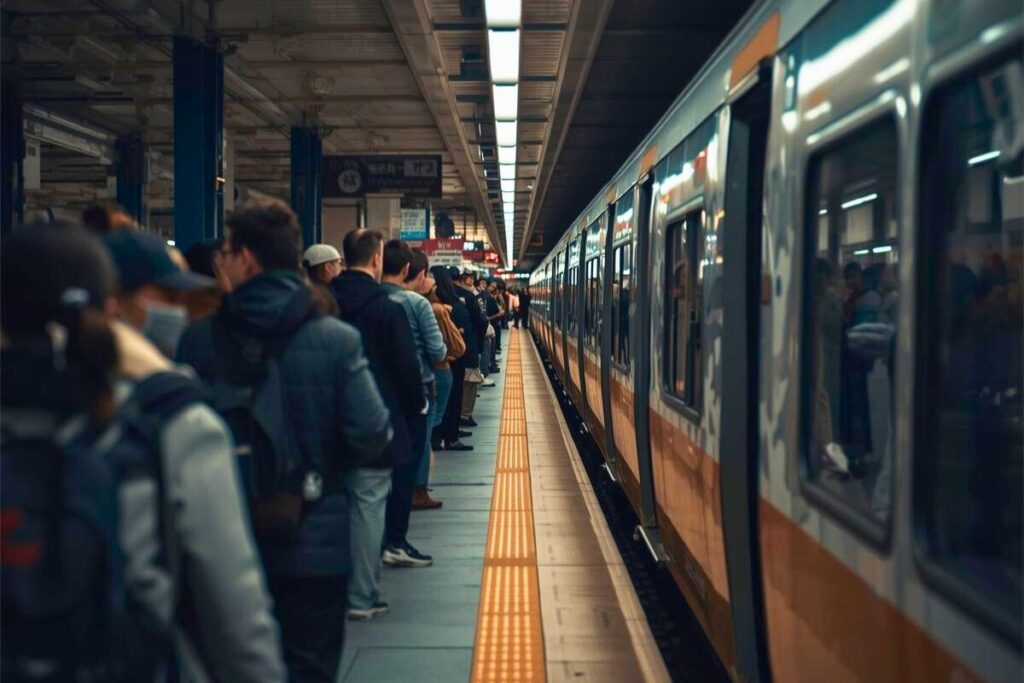
Commuters wait quietly on crowded platforms.
Minor conflicts are softened with brief apologies.
These behaviors become physical habits, not rules enforced by fear.
This is also why Japanese trains and public spaces remain quiet even when crowded.
→ Internal Link: Why Japanese Trains Are So Quiet
Personal Experience: What I Felt During a Real Earthquake in Japan
I would like to share a personal experience to explain this calmness more realistically.
I have experienced several earthquakes in Japan, including ones strong enough to stop trains and disrupt daily life for hours.
During one earthquake, I was commuting when the train suddenly stopped between stations. The lights remained on, but no one knew how long we would be there.
Inside the train:
No one screamed.
No one pushed toward the doors.
People quietly checked their phones for official announcements.
I remember feeling fear rising in my chest.
But at the same time, I noticed something else.
An elderly man was standing without holding a strap.
A mother gently covered her child’s ears.
Someone offered their seat without saying a word.
Seeing this, my fear did not disappear—but it settled.
I realized that staying calm was not about pretending everything was fine.
It was about not transferring fear to the people around me.
Later, when the train finally resumed, people bowed slightly to the staff—not because they were happy, but because they understood that shouting would not improve the situation.
This experience stayed with me.
It taught me that Japanese calmness during emergencies is often a quiet, collective decision, not a lack of emotion.
Why Silence Can Represent Respect in Japan
In many cultures, raising one’s voice is seen as strength.
In Japan, silence can serve the same role.
Silence creates space:
- to think clearly
- to calm fear
- to avoid unnecessary conflict
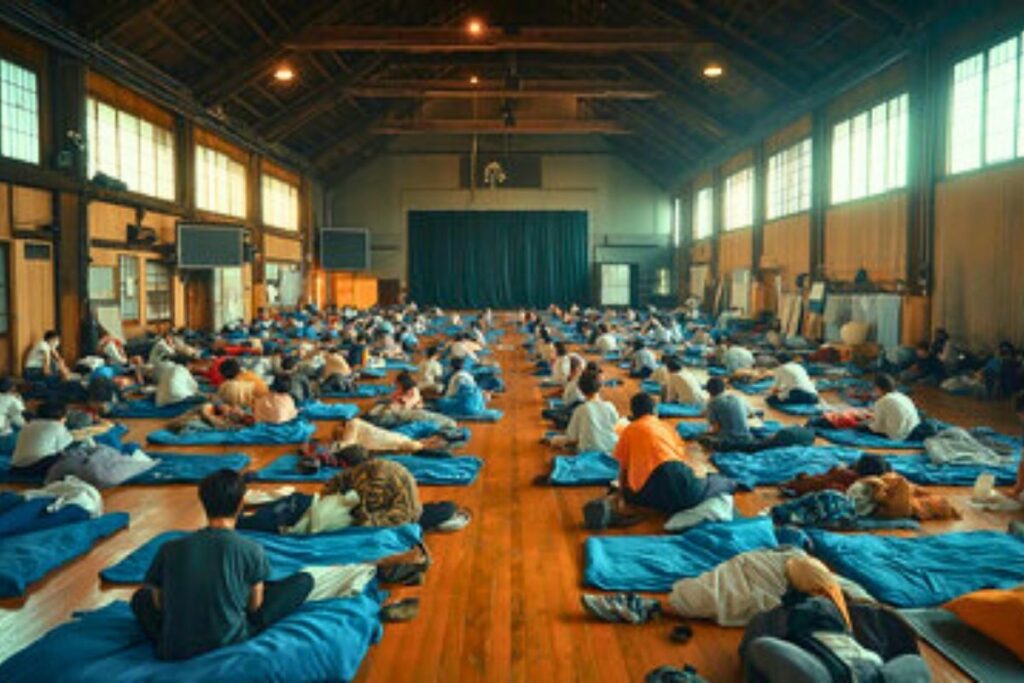
Evacuation shelters may feel unnervingly quiet to outsiders.
This does not mean people feel nothing.
It means many are intentionally controlling themselves for the sake of the group.
This connects closely to Japan’s indirect communication style.
→ Internal Link: Reading the Air: Indirect Communication in Japan
What “Strength” Means in Japanese Culture
In Japan, strength is often defined as:
- Enduring discomfort
- Not directing emotions at others
- Fulfilling responsibilities even when it is painful
This idea appears everywhere—from folklore to modern anime.
Heroes are not those who shout the loudest.
They are those who endure quietly until action is truly necessary.
That does not mean staying silent forever.
When patience is exhausted and respect is ignored, Japanese people can become firm and uncompromising.
Physical expressions of respect, such as bowing, reflect this value.
→ Internal Link: Why Japanese People Bow Instead of Shaking Hands
How Overseas Viewers Interpret Japanese Calmness
When people abroad see this behavior, reactions vary:
- Admiration
- Confusion
- Concern about emotional repression
All of these reactions are understandable.
Japanese culture is not perfect.
Silence can sometimes hide pain that deserves attention.
However, it is also true that shared calm has prevented panic, injuries, and secondary disasters during real crises.
If You Experience a Disaster in Japan: Practical Advice for Foreign Visitors
Japan is a country where earthquakes, typhoons, and other natural disasters can occur.
If you are visiting Japan and experience an emergency, the most important thing to remember is this:
You do not need to act alone.
1. Observe the People Around You First
In an emergency, many Japanese people remain calm and act collectively.
If you are unsure what to do:
- Look at what people around you are doing
- Follow the general flow calmly
- Avoid panicking or running unless others are clearly doing so
In Japan, disaster response often relies on shared behavior and quiet coordination, rather than loud instructions.
Watching local people carefully is often the safest first step.
2. Ask Nearby People in Simple English
If you feel confused or uncertain, do not hesitate to ask someone nearby.
You do not need perfect English or Japanese.
Simple phrases are enough, such as:
- “Is this safe?”
- “What should I do?”
- “Evacuation?”
- “Where should we go?”
Most Japanese people may not speak fluent English, but many will try to help using gestures, simple words, or by guiding you physically.
Pointing, nodding, and short sentences work surprisingly well.
3. Do Not Rely Only on Your Mobile Phone
During major disasters:
- mobile networks may stop working
- internet access may be unstable
- translation apps may be unavailable
Because of this, face-to-face communication becomes very important.
Pay attention to:
- station staff
- store employees
- local residents
- emergency announcements
Even if you do not understand the language, tone and movement often communicate urgency or safety.
4. Stay Where People Gather
In Japan, people often move toward:
- schools
- public halls
- parks
- large stations
These places are commonly used as evacuation or information points.
If you are unsure where to go, staying near other people is usually safer than moving alone.
5. Trust That People Will Try to Help
Many foreign visitors worry:
“Will people help me if I don’t speak Japanese?”
In disaster situations, language matters less than shared humanity.
Japanese people are generally taught to:
- help those nearby
- share information
- cooperate quietly
You may not receive dramatic reassurance, but you will often find practical, calm assistance.
6. Prepare Mentally, Not Fearfully
Japan is well-prepared for disasters, but no system is perfect.
You do not need to be afraid—just aware.
Knowing that:
- observing others is acceptable
- asking simple questions is okay
- communication can be non-verbal
can reduce anxiety significantly.
Preparedness is not panic.
It is simply understanding how people behave.
Why This Matters
Understanding how to act during emergencies helps visitors feel safer and more confident.
It also reflects an important aspect of Japanese society:
In difficult moments, people often move together.
If you remember to watch, listen, and communicate simply,
you are far less alone than you might think.
Conclusion: Calmness as Responsibility, Not Emotionlessness
So why do Japanese people remain calm in chaos?
Because many believe:
- My actions affect everyone
- Peace is fragile
- Remaining calm is a form of responsibility
This mindset has nothing to do with wealth or social status.
In emergencies, selfish behavior—hoarding, looting, or exploiting others—is strongly disliked.
The underlying belief is simple:
Survival is collective.
And how we behave afterward matters just as much.
Not “only me.”
But “all of us.”
That quiet answer, shaped by daily habits and shared values, is often what makes the world pause and ask:
“Why are they like this?”

[English] A local insider born in Nagasaki, educated in the U.S., and now based in the Kanto region. After a career in finance and publishing in Tokyo, I now explore the “Why” behind Japanese culture and hidden regional gems. My mission is to help you discover the authentic heart of Japan beyond the tourist crowds.
[한국어] 나카사키 출생, 미국 유학을 거쳐 도쿄 금융권 및 편집자로 활동한 현지인 에디터입니다. 현재 관동 지역에 거주하며 후쿠오카를 비롯한 일본 전역의 ‘진짜’ 매력과 독특한 문화 이야기를 전합니다. 여러분의 여행이 더욱 깊어지는 길잡이가 되겠습니다.