[Introduction: Is Your Soul Feeling “Dry” Lately?]
In our modern world, we live in an era of unprecedented convenience. However, this lifestyle has come at a silent cost: a profound “dryness” of the mind and body.
We spend our days in air-conditioned rooms, walking on asphalt that disconnects us from the earth, and bathed in the artificial blue light of screens. Our nervous systems are in a state of constant tension, leaving our spirits as dry as dust. If you’ve ever felt heavy despite sleeping enough, or irritable for no reason, your body is longing for the two fundamental sources of life: Water and Earth.
Japan is a “Volcanic Archipelago.” While the land faces the threat of eruptions, it also pulses with the earth’s fiery heart. This energy gushes forth as countless Onsen (hot springs)—nature’s own medicine.
In this episode, Ren journeys to a misty mountain valley in the Edo period.
- What is the primal power of the earth that heals modern ailments?
- How does the Japanese “faith in hot water” differ from Western “shower culture”?
Join Ren as he discovers that in Japan, bathing is not just for hygiene—it is a sacred ritual of purification. Let’s follow a single droplet of water to find the true origin of healing.
[The Story]
1. The Heavy Silence of the Living Room
It was a Sunday afternoon. A dull, oppressive silence filled Ren’s living room.
“Ugh… my shoulders feel like they have iron plates inside them,” his mother groaned, rubbing her lower back after hours at a computer. His father sat with bloodshot eyes, building a mountain of tissues as he sneezed repeatedly—the victim of Japan’s seasonal hay fever. His younger sister was curled up on the sofa, grumpily scratching her arms where her eczema had flared up.
Ren felt it too. The pressure of upcoming exams had left his head foggy and his whole body heavy. Since it was his day off, he was wearing his favorite grey hoodie and jeans. But no matter how light his clothes were, the weight in his heart wouldn’t lift.
“Everyone looks… like they’re about to break,” Ren whispered. At that exact moment, the glass of water on the table began to ripple violently.
2. The Mysterious Guide from a Droplet
Ring… Ring… A clear, pure sound, like the tinkling of transparent bells, echoed through the room.
A single, giant droplet leaped out of the glass and took shape on the table. Standing there was a tiny spirit, no more than 15 centimeters tall. Her skin was translucent blue like spring water, and she wore soft, earth-toned clothes like moist, rich soil. On her head was a small lotus-leaf hat, and a tiny bell hung from her waist.
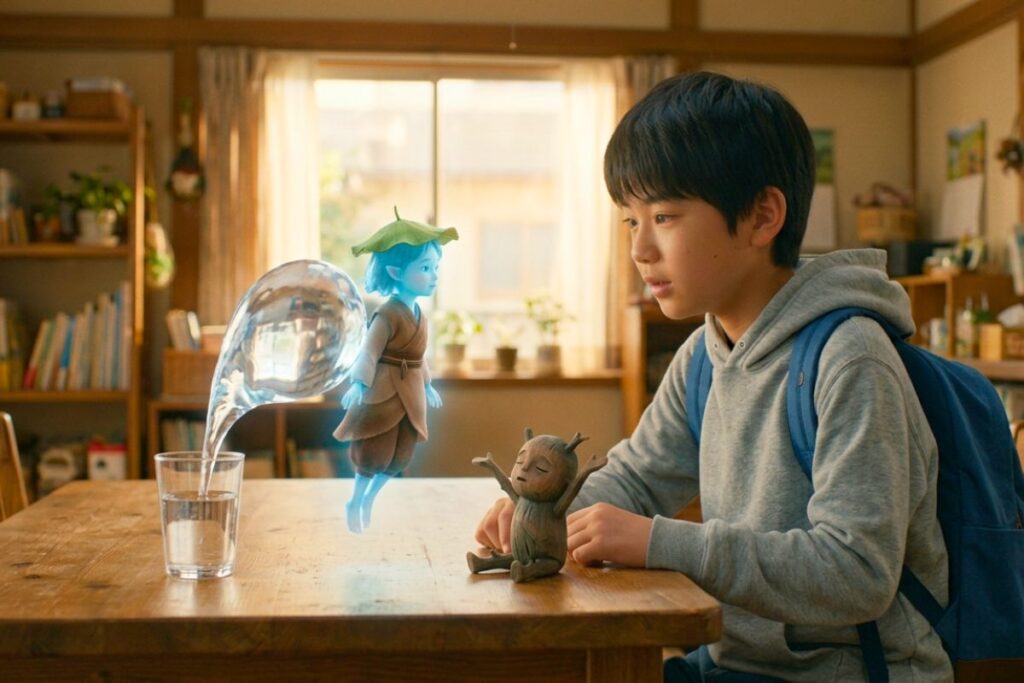
Morinoko, the wooden spirit who had been dozing nearby, nearly fell off his chair. “Oh! It’s you, Suzu! Ren, meet Suzu. She is the incarnation of the minerals that gush from the deep belly of the earth.”
Suzu looked deep into Ren’s eyes and shook her head. “Ren, your family is depleted of Earth’s energy. Smartphones and computers are convenient, but without the balance of nature, humans eventually dry out. What you need now is to be ‘unraveled’ by Water and Earth.”
3. Into the Mist: The Sound of Wooden Clogs
With a flick of her wrist, Suzu caused the water from the glass to overflow, turning it into a warm steam that swallowed the room. “Whoa! I can’t see anything!”
In the mist, Ren felt the weight of his feet change. The cushion of his sneakers vanished, replaced by a hard sensation of wood. As the mist cleared, Ren found his sneakers transformed into wooden clogs called Geta.
“Haha! You can’t run full speed in those!” Morinoko laughed. Ren wobbled, gripping the thongs of the geta with his toes. “Suzu, why geta?”
“Rubber soles disconnect humans from the ground,” Suzu explained. “Geta are made of wood and touch the earth. By wearing these, the breath of the earth is transmitted directly through your soles.” As Ren felt the uneven texture of the dirt road, he felt a strange, grounding sensation—a realization that he was truly standing on the Planet Earth.
4. The Blessing of the Volcano: Drinking the Magic Water
As they descended the slope, a valley filled with rising steam appeared. This was an Edo-period “Toji-ba” (healing village).
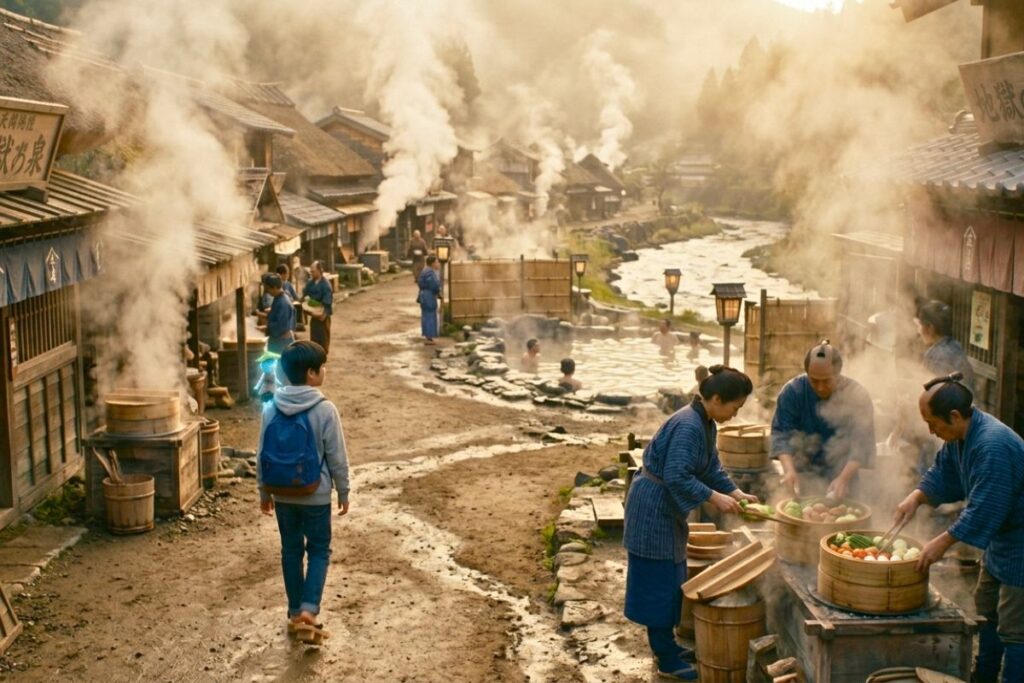
“Look, Ren,” Suzu pointed. “The water there is milky white, but this one is crystal clear. Japan is an island of volcanoes. Magma melts different rocks in different places, bringing up different minerals. Some heal wounds, some soften the skin, and some warm you to the core. Just as Japan has ‘Eight Million Gods,’ the water has ‘Eight Million Personalities.'”
Ren saw people drinking the water from wooden ladles. “Wait, can you drink it?” “Yes! This is the earth’s herbal tea. You are bringing the power of the volcano into your body. It’s slightly sour, but can you taste the iron?” Ren took a sip. As it went down, he felt his body warming up from the inside out, a glow of energy spreading through his chest.
5. A Day of Surrender
A day at the Toji-ba was simple yet profound. At sunrise, people took the “Asayu” (morning bath) to wake their cells. At noon, they ate vegetables steamed by the earth’s heat. In the evening, Ren saw people smearing warm mud on their skin by the river.
“Try it, Ren. That mud is the wisdom the earth has stored for tens of thousands of years.” Ren tentatively applied the mud. To his amazement, he felt the “iron plate” tension in his shoulders being slowly sucked out of his body.
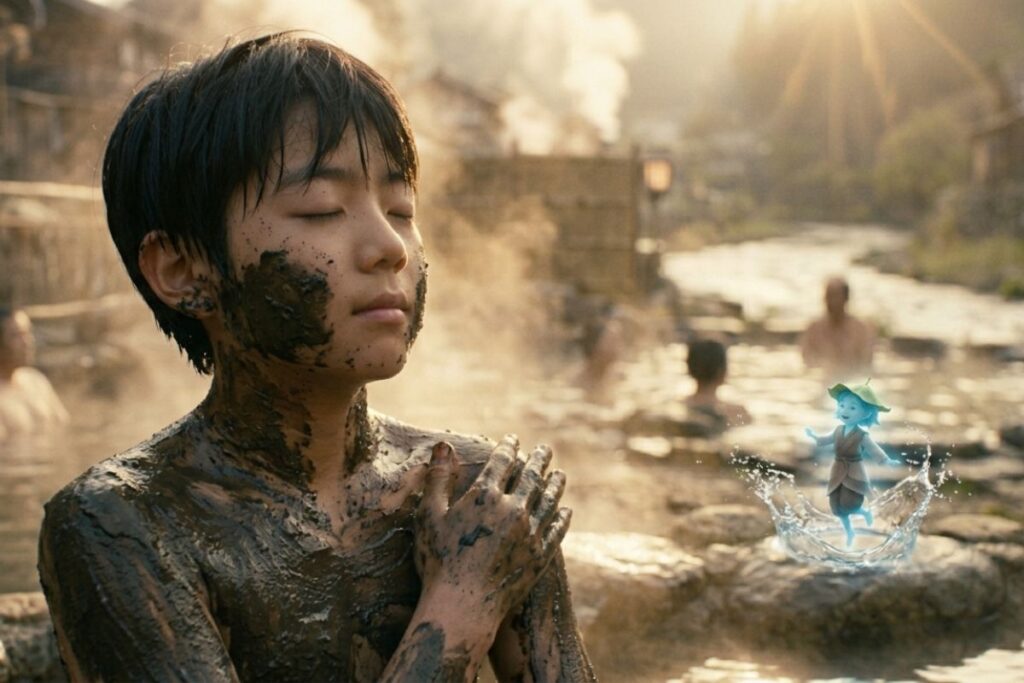
“It’s strange… it feels like all the ‘trash’ inside me is being washed away.” “Exactly,” Suzu smiled. “Hot springs are the ‘Blood of the Earth.’ By immersing yourself, your small life becomes one with the great life of the Earth. This is the ultimate maintenance the Japanese discovered.”
6. Return and Rebirth: Ren’s Awakening
“…Ren, the bath is ready.”
His mother’s voice brought him back. He was on his sofa, his slippers back on. But the “warm core” he received at the Toji-ba remained.
“Mom, Dad… let’s all take a long bath tonight. Let’s use some salts and really soak.”
Ren’s sister looked up, her scratching stopping for a moment. Ren had learned the true meaning of “rest.” To the old Ren, resting meant “looking at a smartphone.” But that only tired the brain while leaving the body behind.
“Resting means unraveling yourself and merging with the earth.”
Feeling the soil through geta, accepting the heat of the water—this was the “Sensory Reboot” modern people need most. Ren realized that even though the earth can be scary with its earthquakes, its blessings are infinitely greater. He headed to the bathroom, loving his bath not as a chore, but as a sacred ritual to connect his life to tomorrow. He was no longer a boy afraid of fatigue; he was a wise young man who knew how to tune his own soul.
✍️ Author’s Epilogue: The Laundry of the Soul
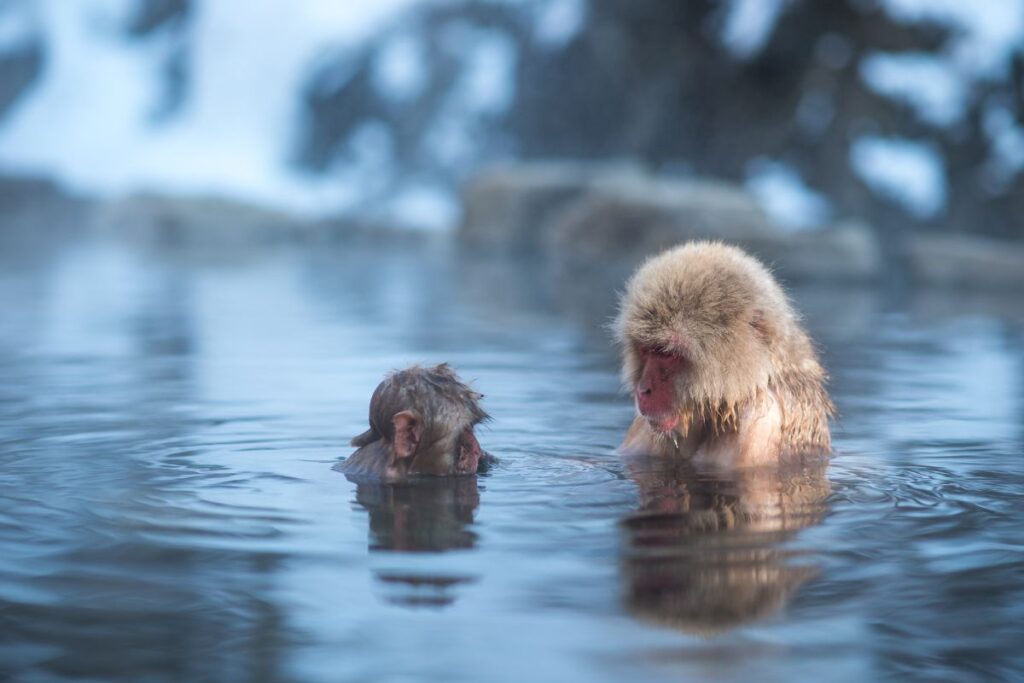
My family loves hot springs. Whenever we travel, we bathe at least three times: before dinner, before bed, and the next morning. It is a ritual to strip away the noise of daily life and return to our true selves.
My husband grew up in a hot spring town in Kagoshima. For him, a bath was part of his “daily routine.” Carrying a basket with a towel to the local public bath was as normal as breathing. My grandparents, despite their exhausting work at their restaurant, spent one month every year in a Toji-ba. This “rebooting period” allowed them to stay healthy and work on their feet throughout their lives.
Japan is a land of duality—earthquakes and eruptions exist alongside these healing waters. But this rich water is the “Laundry of the Soul” for us. I invite you, our international guests, to research the rules and dive into this embrace of the earth. You will surely emerge as a brand-new version of yourself.
👉 Learning Section for Adults
1. The Volcanic Archipelago and Diverse Mineral Springs
Japan is home to about 10% of the world’s active volcanoes. This creates a vast diversity of spring types (Sulfur, Carbonate, Iron, etc.). Some are even classified as “Drinking Springs,” acting as natural medicine for digestion or anemia.
2. “Showers” vs. “Bathing”: The Science of Restoration
Western showers are for “Cleaning,” but Japanese bathing is for “Restoration.” Raising the deep body temperature in a 40°C bath activates the parasympathetic nervous system, drastically improving sleep quality. This is why Japanese people feel they cannot sleep well without a bath.
3. Shindo-fuji: Inseparable from the Earth
“Body and soil are one.” Accepting the earth’s dangers (earthquakes) along with its blessings (onsen) is a core part of the Japanese worldview. This respect for nature is why we treat the water and public bath etiquette with such reverence.
🔮 Foreshadowing for the Next Episode
Having learned the healing power of “Earth,” Ren begins to wonder: “What else can the earth do?” Morinoko whispers, “Earth can also become a shape that warms the heart through art.” Next time, we enter the world of Japanese Ceramics and the Tea Ceremony, where the spirit of “Omotenashi” is poured into a single bowl. …Episode 6: The Art of Clay and Silence.
「Read Episode 4 here:How Is a Soul Forged into Steel? The Master Swordsmith and the Awakening of Objects」
「Read Episode 6 here:Why Does Japanese Hospitality Feel Different? The Hidden Philosophy Behind Omotenashi」
About the Author
A native Japanese creator and passionate traveler born in Nagasaki and currently residing in the Kanto region. After studying in the U.S. during high school and working for a U.S. financial institution, she transitioned into the Japanese publishing industry, gaining a unique perspective on how to bridge cultures.
As a mother of two who has traveled extensively across Japan and to over 15 countries—from Egypt to Switzerland—she believes that understanding a nation’s underlying values is the key to global harmony. Through this site, she blends her love for storytelling and Japanese heritage to share the timeless morals and Japanese spirit with children and families worldwide.